The Hidden Harm of the Diagnosis of personality disorder report
For over 35 years, across our projects and services, we have listened to people’s experiences of the mental health system. Time and time again, we’ve heard experiences where the mental health system causes people more harm than help, and stories of people’s human rights not being upheld.
This is why we have made it an organisational mission to advocate for, and apply to our own services and influencing work, a holistic and social justice approach to mental health.
In this report we focus on the stories of the diagnosis of personality disorder.
Our findings
- Health is compromised
Receiving the diagnosis of personality disorder had significant implication for the quality of care people received, and increased people’s chances of being excluded from lifesaving care and support. In the mental health system, it is women that are predominantly impacted by the diagnosis as they account for 75% of the people that get given it. - Trauma experiences are ignored
Despite the strong emphasis on trauma-informed care from Welsh Government, participants’ accounts revealed a widespread failure to acknowledge, assess, or understand individual trauma histories as part of routine clinical practice. When experiences were shared, they were often belittled or ignored. - The diagnosis of personality disorder can challenge human rights
Our findings give cause for concern that this diagnosis goes against international human rights law, the Convention on the Rights of Persons with Disabilities (CRPD) and the Welsh Government guidance on reducing restrictive practices. In doing so, the diagnosis discriminates against a person’s rights to free and informed consent, privacy, liberty and security, personal integrity, and access to justice.
Content information: this report contains references to experiences relating to suicide and suicidal ideation, self harm, mental distress, and abuse.
This report shines a necessary light on the diagnosis of ‘personality disorder’. As the findings make starkly clear, this label often serves not as a gateway to support, but as a barrier to compassion. — Alexis Quinn Survivor, psychotherapist, author and manager of the Restraint Reduction Network
You may be interested in
-
The hidden harm of the diagnosis of personality disorder. Mental health and human rights.
Download the report (PDF 4 MB)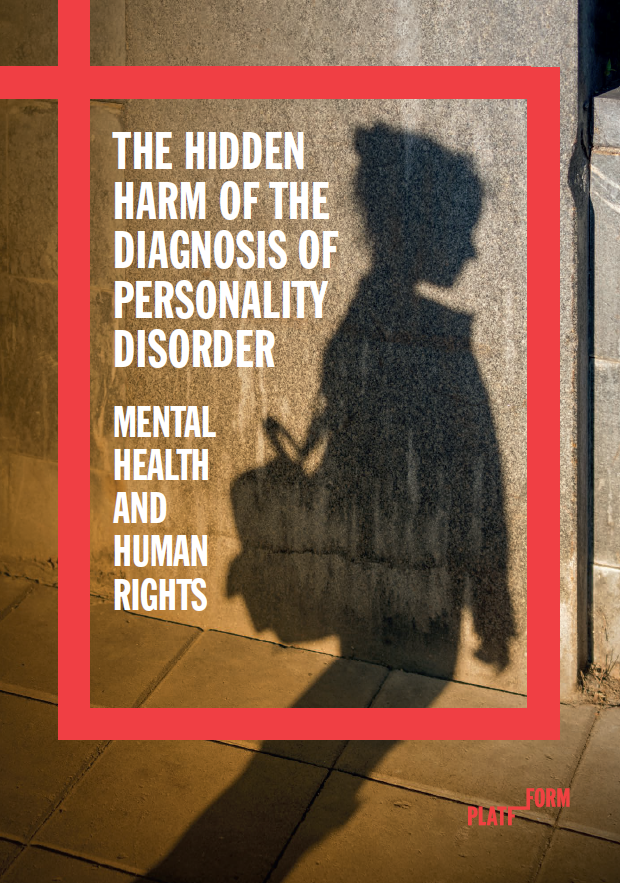
-
The Truth Project: what it’s for and how it works
Stories received through the Truth Project are first-hand accounts of people’s experiences within the mental health system, shared as unedited as possible. Openness reduces shame, and helps create shared understanding of what needs to change.

-
Stories from: The diagnosis of personality disorder
The diagnosis of personality disorder doesn’t tell us the full story – or the reasons behind people’s distress.
In these real stories of personality disorder diagnosis from within the medical system, people share their first-hand experiences, their lives after diagnosis, and the stories that the label can’t tell us.
-
Calling for a change to the way trauma is diagnosed and treated
Platfform’s new report, ‘The Hidden Harm of the diagnosis of personality disorder’, which will be launched at our sold-out event this Thursday 12 February, will call for change to the treatment of people given the diagnosis of personality disorder. …