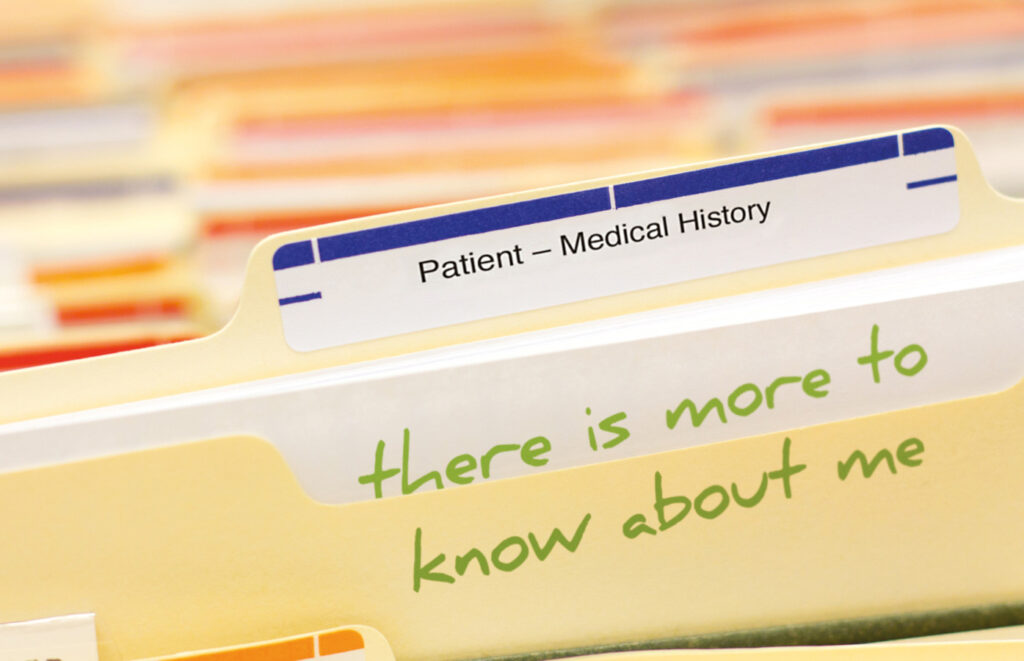
Calling for a change to the way trauma is diagnosed and treated

Platfform’s new report, ‘The Hidden Harm of the diagnosis of personality disorder’, which will be launched at our sold-out event this Thursday 12 February, will call for change to the treatment of people given the diagnosis of personality disorder.
This report is based on evidence derived from stories of harm caused through the diagnosis and treatment of personality disorder.
Platfform’s findings are hard-hitting – but they aren’t new.
In 1988, an article in the British Journal of Psychiatry reported that psychiatrists treated patients with a diagnosis of personality disorder as ‘more difficult and less deserving of care compared to other patients’.
Since at least 2023, Platfform’s Clinical Psychologist and Director of Policy and Campaigns, Dr Jen Daffin, has observed that the diagnosis of personality disorder often prevents people receiving appropriate treatment and support. The label itself overshadows the diagnosis of developmental and complex trauma.
As currently structured, mental health services built around the diagnosis and treatment of personality disorder fail to support recovery, and actively contribute to fear, mistrust and suffering.
It cannot be right for the mental health care system to harm individuals.
We need to listen to stories which tell us how people experience diagnosis and treatment, and to understand how it makes them feel.
The biomedical model (which focuses on diagnosis, medication, and symptom reduction) overshadows the role that social circumstances and previous trauma play in people’s mental health.
That same model tends to suggest that people with a mental health condition need to change, rather than proposing social change and inclusion, leading to lack of empowerment, discrimination and institutionalisation – and a legacy of trauma spanning generations.
Platfform believes strongly that the trauma-informed evidence of people who have experienced diagnosis and treatment should be used to help guide the formation of new, more effective systems.
The Platfform report uses evidence gleaned from the experience of thirty individuals, and demonstrates that too often individuals who are expressing distress are labelled as manipulative, dramatic, or attention seeking. Sometimes providers of public services exclude those with a diagnosis of personality disorder.
We’ve seen that, too often, diagnosis is the turning point in an individual’s life – for the worse.
Rather than opening access to support, diagnosis becomes a barrier, obscuring trauma, silencing distress, and excluding individuals from support services.
Individuals were described as too complex, too difficult, or undeserving of help – language used to justify limited care or the withdrawal of care.
People felt betrayed, abandoned, or trapped by the system.
Why does it matter?
- Because having post-traumatic reactions and responses to the effects of abuse, neglect and violence ignored or minimised, and being told that those responses are merely symptoms of personality disorder, or even ‘lies’, can be retraumatising, and can block access to appropriate life-saving care.
- Because forced treatment, institutionalisation and neglect are human rights abuses, which should not happen.
- Because people seeking mental health support must be treated fairly, without stigma or discrimination, and should be included in decisions about their care.
- And because rights-based, trauma-informed, person-centred care improves recovery and is simply the right thing to do.
We have an opportunity to improve standards of care, a chance to take a holistic, human rights approach to mental health.
We need to unhook ourselves from outdated and oppressive practices, and create a better, trauma-informed system where individual needs are prioritised.
Change will take time, effort, and collective action – but we must not shy away from it.
By exploring how practitioners and people who use mental health services can work together towards a solution, we can move away from restrictive practices, and respect people’s human rights during diagnosis and treatment.
The time for change is now.
Where do we hope it will take us? To a place of hope, emotional safety and trust, with better engagement and better outcomes, and a system that heals, rather than traumatises.